From Caregiver to Patient: JHAH Team Guides One of Its Own Back to Strength
August 11, 2026
After a career of caring for others, nurse Rachelrani Nandkumar Gaikwad spent nearly five months as a patient at Johns Hopkins Aramco Healthcare – and left with a story of a remarkable recovery, of teamwork and extraordinary resilience.
For more than two decades, Rachelrani Nandkumar Gaikwad has been the one at the bedside. She joined Aramco’s medical organization in December 2000, serving as a charge nurse in the Neonatal Intensive Care Unit, and caring for the smallest and most fragile patients a hospital ever admits. Her career with the organization continued when Aramco's healthcare operations became Johns Hopkins Aramco Healthcare (JHAH), the joint venture formed with Johns Hopkins Medicine in 2014.
In January 2026, however, Rachel herself became the patient – admitted to JHAH with Guillain-Barré syndrome, a rare condition in which the body's immune system attacks the nerves. The weakness it causes can progress with frightening speed. In Rachel's case, it did – affecting her ability to move, to swallow and, before long, to breathe.
Her condition became extremely critical. She spent approximately a month in the Intensive Care Unit, where she required mechanical ventilation, a tracheostomy, a central venous line and medications to support her heart and blood pressure. Behind the clinical complexity was a deeply human reality – a healthcare professional now fully dependent on the very system she had served for 25 years.
A nurse knows exactly what a ventilator does, what a tracheostomy involves and what every alarm means. This is knowledge that can make being a patient harder, not easier. It made clear communication, reassurance and dignity as essential to her care as any clinical intervention.
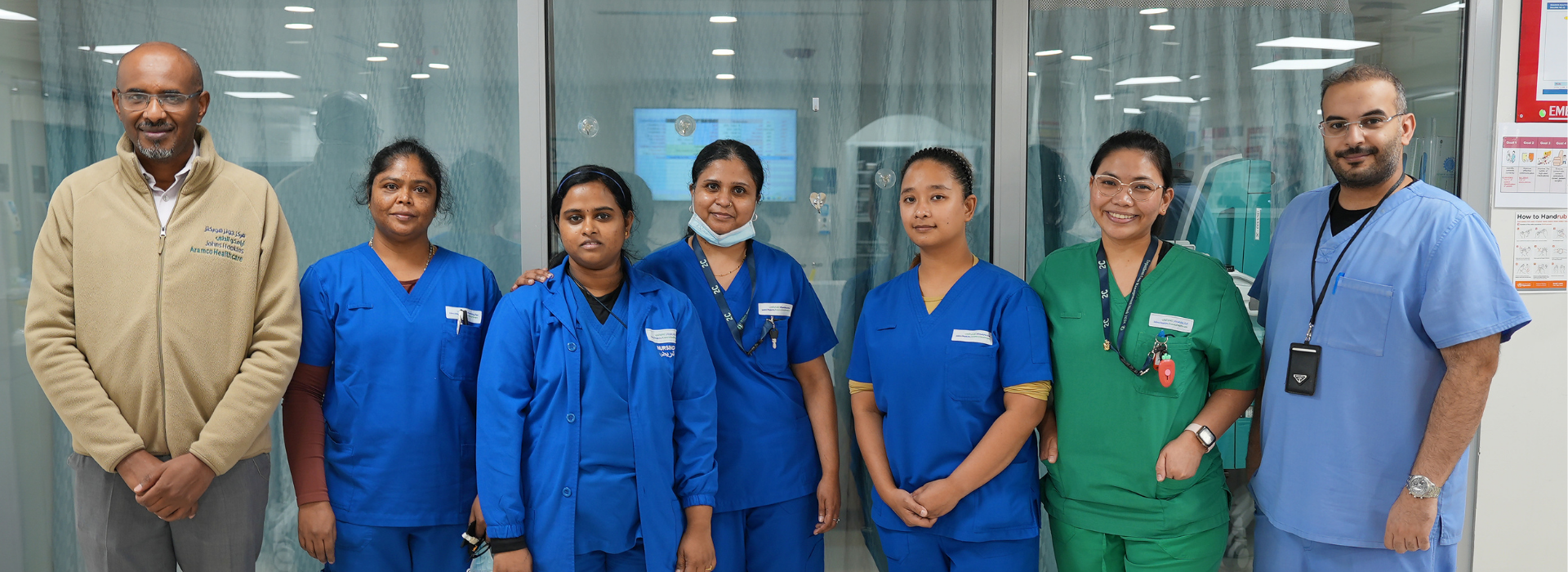
From the moment of her admission, a multidisciplinary team came together around a shared commitment: to protect her safety, dignity and recovery at every step. Specialists across the ICU, Neurology, Nursing, Respiratory Therapy, Physiotherapy, Nutrition and Case Management worked in close coordination – delivering advanced therapies, watching for complications and ensuring that every transition in her care was a safe one.
The challenges were relentless. Prolonged immobility, swallowing difficulties and instability in the body's automatic functions, such as heart rate and blood pressure, each demanded continuous monitoring and a timely response. Preventing harm at every stage became the disciplined foundation on which recovery could be built.
With intensive rehabilitation and constant encouragement, Rachel progressed from being completely bed-bound and dependent to sitting, then standing, then walking with assistance. The successful removal of her tracheostomy and feeding support marked major milestones – each achieved through careful planning, teamwork and an unwavering focus on the patient’s wellbeing.
On June 10, after nearly five months in hospital, Rachel was discharged home in stable condition with a structured plan for her continued recovery. She is now continuing physiotherapy and rehabilitation in India, walks with the assistance of one person and says she is feeling much better.
“I am deeply grateful to everyone involved in my care,” Rachel said. “The dedication, compassion and professionalism of the JHAH multidisciplinary team was incredible. The support of everyone at the hospital and beyond carried my family and me through every stage of this difficult journey. Their coordinated efforts played a crucial role in my treatment and my recovery.”
The physicians, nurses and caregivers that looked after Rachel chose not to be named for this story – and that is fitting. The recognition belongs to all of them: a team that showed what it means when a hospital cares for one of its own with the same excellence, empathy and dedication that it brings to every patient.