
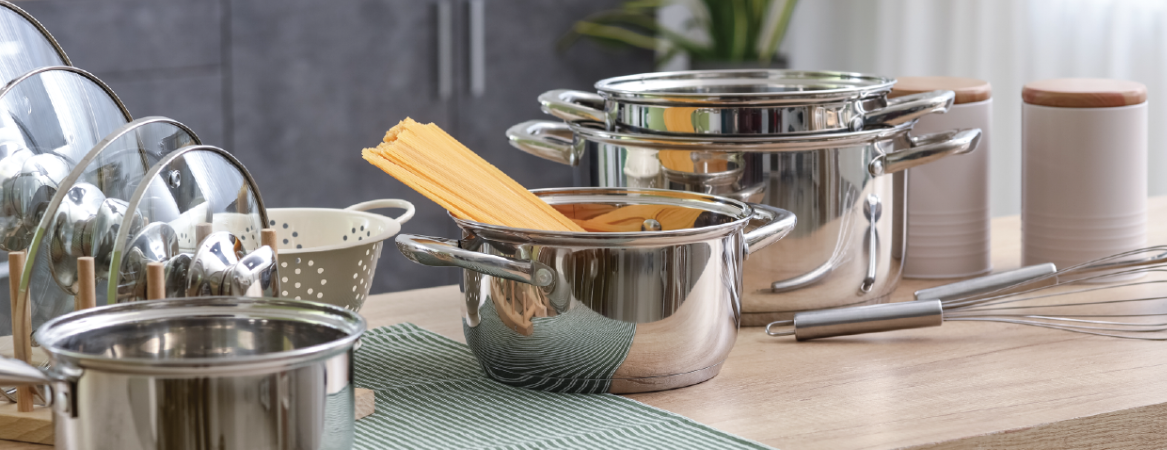
Choosing Safer Cookware for a Healthier Ramadan
January 29, 2026
The cookware you use in the kitchen preparing suhoor, iftar and meals plays an important role in keeping your food safe and supporting your family’s wellbeing. With a few simple choices you can reduce exposure to unwanted chemicals, protect the quality of your meals and make your cooking routine smoother throughout the month.
Know the Materials You’re Using
Different cookware materials behave differently when heated. Stainless steel, cast iron, enameled cast iron and high‑quality ceramic are generally considered safer options because they do not release harmful chemicals during cooking. Nonstick pans can be convenient, but older or scratched coatings may break down at high temperatures. If you use nonstick cookware, choose newer pieces from trusted brands and avoid overheating them.
Choose Cookware That Matches Your Cooking Style
Think about the meals you prepare most often during Ramadan. Stainless steel works well for sautéing vegetables and simmering soups. Cast iron holds heat for longer cooking times and gives a natural nonstick surface when seasoned properly. Ceramic and glass bakeware are good choices for oven dishes because they heat evenly and do not react with acidic foods. Matching the material to the task helps you cook safely and efficiently.
Avoid Damaged or Worn‑Out Pieces
Scratched, chipped or peeling cookware can release unwanted particles into your food. Inspect your pots and pans before Ramadan begins. If you notice damage, consider replacing the item or using it only for low‑risk tasks such as boiling water. Taking care of your cookware protects both your meals and your family’s health.
Use the Right Utensils
Metal utensils can scratch nonstick or ceramic coatings. Choose wooden, silicone or heat‑safe plastic utensils to protect the surface of your pans. This simple habit helps your cookware last longer and reduces the chance of coating breakdown during cooking.
Cook at Safe Temperatures
High heat can cause certain materials to release fumes or break down. Use medium heat for most cooking tasks and preheat pans gradually. If you use nonstick cookware, avoid leaving an empty pan on the stove because it can overheat quickly. Gentle cooking protects both your cookware and the nutrients in your meals.
Clean and Store Cookware Properly
Proper care keeps your cookware safe for longer use. Allow pans to cool before washing to prevent warping. Avoid abrasive scrubbers on coated surfaces. Dry cookware completely before storing it to prevent rust or mold. Organize your kitchen so pots and pans are easy to reach during busy Ramadan evenings.
Consider Healthier Alternatives
If you are planning to upgrade your cookware, look for pieces labeled as stainless steel, cast iron, enameled cast iron or high‑quality ceramic. These materials offer durability and safety without the need for chemical coatings. Investing in a few reliable pieces can make your Ramadan cooking routine easier and healthier.
A Safer Kitchen for a Smoother Ramadan
Choosing safer cookware supports your family’s wellbeing and helps you prepare meals with confidence. By selecting the right materials, caring for your pots and pans and cooking at safe temperatures you create a healthier kitchen environment throughout Ramadan.