
How JHAH's Emergency Team Detected Diabetes in an Infant and Changed One Family's Life
February 23, 2026
At Johns Hopkins Aramco Healthcare (JHAH), our pediatric and emergency teams recently supported a family through a critical moment that led to the early diagnosis of diabetes in an infant who later became one of the youngest patients at our hospital to begin insulin pump therapy.
In 2022, a family welcomed their first child, Reema — a healthy newborn full of energy. Less than a year later, she developed persistent symptoms including fever, vomiting, dizziness and extreme fatigue. As her condition worsened, her parents brought her to the Dhahran Main Hospital Emergency Department.
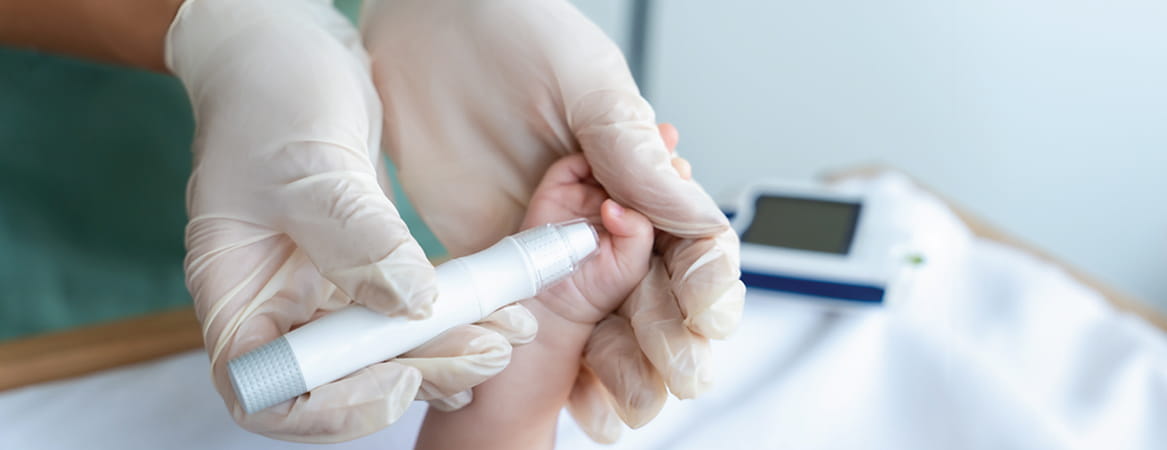
During the initial assessment, Emergency Department nurse John Noby recognized that Reema’s symptoms required further investigation. Guided by clinical judgment, he performed a blood glucose test — a step not routinely included in pediatric emergency evaluations. The result was critically high at 501 mg/dL, prompting an immediate multidisciplinary response.
Reema was stabilized and admitted for further management. Throughout her stay, diabetes educators Sumiah Banimortada and Anwar Awad provided hands‑on training to her parents, helping them learn how to monitor blood glucose, calculate insulin doses and manage her care at home. Pediatric endocrinologist Dr. Narmeen AlBashrawi continued to support the family through diagnosis, treatment and follow‑up. With regular monitoring and adjustments, Reema’s glucose control improved significantly.
Today, Reema is thriving and growing, supported by an insulin pump initiated at just 11 months old — a milestone made possible through early detection, her parents’ advocacy and the coordinated efforts of her care team.
Reema’s family encourages all parents to trust their instincts when it comes to their children’s health. Persistent or unexplained symptoms should never be dismissed, and timely emergency evaluation can be lifesaving. They also highlight the importance of including blood glucose testing as a standard part of pediatric emergency assessments, noting that early testing can prevent delayed diagnoses and protect children from severe complications.
The collaboration between the Emergency Department, PICU, pediatric endocrinology, diabetes education and nutrition teams played a central role in Reema’s recovery and in supporting her family throughout their journey.
Dr. Hanan Al Shaikh continues: “Caring for one of our youngest insulin pump patients required close coordination, clinical expertise and a shared commitment to supporting the family. We are grateful to Dr. Narmeen and the pediatric endocrinology team, our diabetes educators, nutrition services, PICU and the Emergency Department for their dedication to our patients.”