
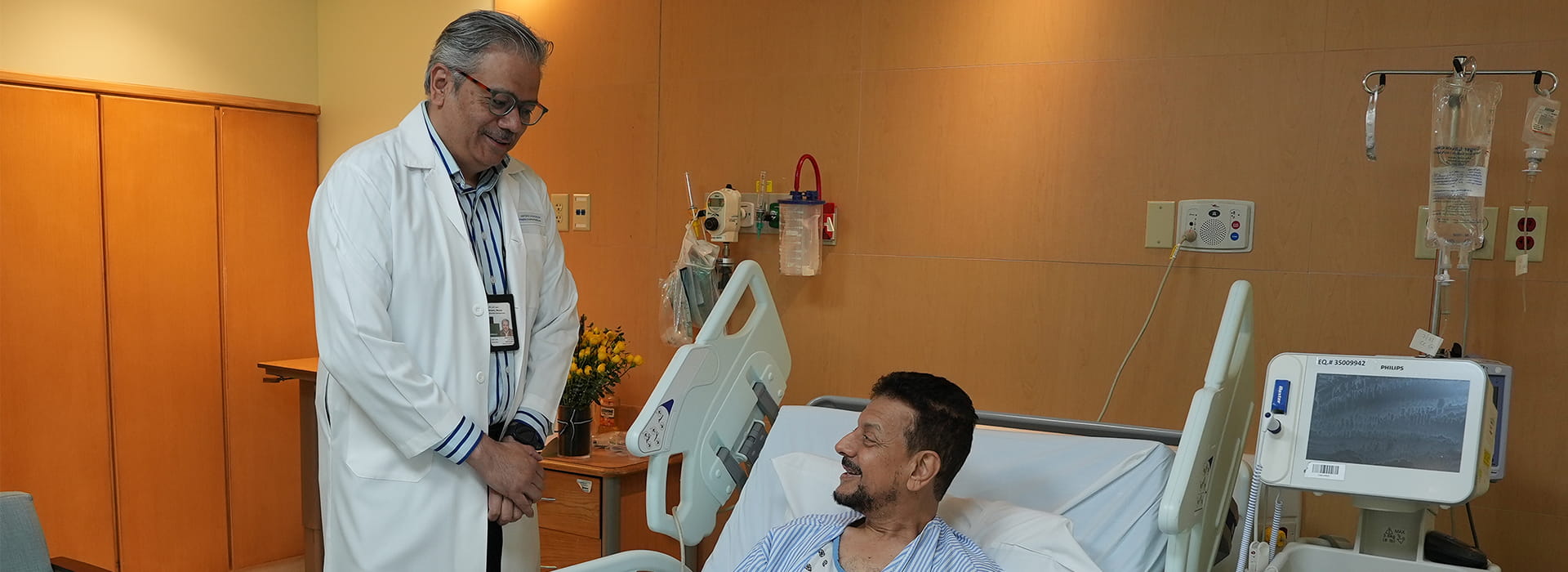
Three decades after a waterskiing accident tore his knee ligament – an injury that threatened to end his sporting life for good – Basim Zarie found the answer where his story first began.
Basim Abdullah Hussein Zarie was born in the Aramco hospital in Dhahran. 69 years later, he returned to the place where his life began – this time, to reclaim it.
For more than four decades, martial arts have been at the center of his life. As a young engineering student in California, Basim trained in several disciplines – among them taekwondo, studying under the renowned taekwondo master Clint Robinson, whose name is linked to film work alongside martial arts legend Bruce Lee. During those years, he also competed in tournaments across the United States.
After returning to Saudi Arabia, he built a 35-year career with Saudi Aramco while continuing to pursue the martial arts – above all aikido, a discipline he went on to train in and refine over many years. Basim later became president of the Saudi Aikido Committee under the Saudi Olympic and Paralympic Committee, helping introduce the discipline to the Kingdom, expand its reach and develop its technical and training programs. More than 800 practitioners, men and women, are now registered across the Kingdom.
Yet behind that record of achievement lay a long personal battle: for more than three decades, he lived with an injury that threatened to take away everything he loved.
The injury did not happen on the mat. During his university years, Basim’s leg became entangled in a waterski tow rope, dragging him underwater and severely damaging the muscles behind his knee. Determined, he continued to train despite the injury, gradually turning a partial tear of the anterior cruciate ligament (ACL) into a complete rupture.
The prognosis at the time was devastating: the injury would most likely end his sporting life.
“I felt a mix of anger and sadness, but I refused to accept it,” Basim recalled. “I said to myself, ‘No, I have to come back, whatever it takes.’”
And he did. But his knee never fully recovered.
Two ligament reconstruction surgeries provided only temporary relief. Over the years, recurring pain and inflammation became a constant presence, interfering with everyday activities such as walking, sitting and even prayer.
What followed was a decades-long search for a lasting solution.
Over the years, he had tried physiotherapy and a series of injections, each bringing relief that would last weeks rather than months.
“After a while, the pain would always come back,” he said.
His path led him to Dr. Mojieb Manzary, JHAH's Chief of Orthopedics, a Consultant Adult Hip & Knee Reconstructive Orthopedic surgeon with more than 28 years of clinical experience and Adjunct Assistant Professor of Orthopedic Surgery at Johns Hopkins Medicine. “His explanation was clear and detailed – how it would go, what I needed to do and what I could expect,” Basim said.
The diagnosis was osteoarthritis of the left knee. “He had exhausted every type of conservative and non-surgical treatment, and once these no longer bring results and daily life is affected, we offer joint replacement,” Dr. Manzary said.
What made the case anything but routine sat hidden inside the bone. One of the screws left behind by Basim's decades-old ACL repair was lodged in the middle of his femur – precisely where a conventional knee replacement places the reference rod for every cutting angle. Removing it would have meant drilling into the bone: more trauma, a longer operation and more pain.
Instead, the Orthopedic team planned the entire procedure in three dimensions before entering the operating room. A pre-operative CT scan was turned into a precise model of Basim's knee, pinpointing the exact position of the screw, and custom-made cutting blocks were manufactured in advance.
“At the time of surgery, the block was ready. I knew exactly how many millimeters I would take and at what angle, without drilling the bone or removing the screw. The result came out exactly as we had planned,” Dr. Manzary said. The approach meant that the screw could stay in place, and the operation could proceed without the additional bone work that removing it would have required.
The results were apparent almost immediately. By the morning after surgery, Basim was walking more than 100 meters, bending his new knee through a full range of motion from 0 to 120 degrees, climbing stairs and doing exercises. “With this rapid improvement and a short period of physiotherapy, I know my health and fitness will be better, God willing,” Basim said.
His recovery now centers on physiotherapy, and he is progressing well – helped by low post-operative pain, muscle strength built over four decades of training, and in Dr. Manzary's words, “his courage and very strong desire for a fast, early recovery.”
“Physical fitness is a very positive factor in tolerating the operation and recovering from it,” he noted. Behind him stands the wider JHAH team: “the orthopedic surgeons together with our colleagues in anesthesia, nursing and physical therapy,” collaborating, as Dr. Manzary put it, “to make the patient’s journey a genuinely pleasant part of their life.”
Indeed, Basim’s gratitude extends to the whole team. “Dr. Manzary was precise and diligent, and the entire medical team was attentive and caring throughout the process.”
Basim has no intention of slowing down. He sees aikido – a discipline built on redirecting force rather than meeting it head-on – as more than sport, with its principles now translating into leadership and entrepreneurship. “God willing, I'll continue in this field and serve my country and serve people through it – at the local, Arab and international levels.”
30 years after an injury that was supposed to end his sporting life, Basim is planning for much more.