A Life Saved in 35 Minutes: How an After-Hours Team Delivered JHAH’s Fastest Heart Attack Response of 2025
August 27, 2026
A 72-year-old retiree whose heart stopped in the back of an ambulance reached JHAH with an after-hours team ready and waiting to open his blocked artery in just 35 minutes – less than half the international benchmark.
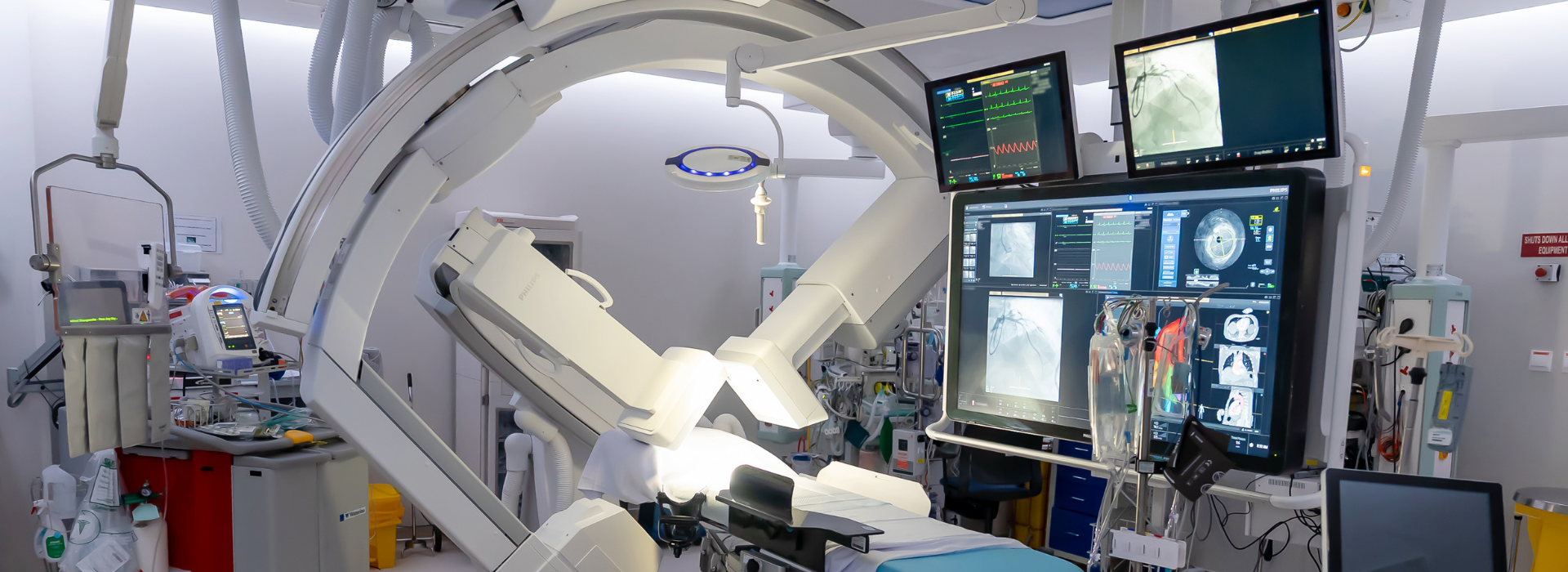
The hospital was quiet as is usual after hours, when the daytime rush has eased and the corridors empty out. Then the alert came in: a patient in cardiac crisis was inbound, minutes away, his heart already failing. Within moments, a team was on the move – not toward a patient they could see, but to a room they had to prepare for an emergency response.
The room was to receive a 72-year-old retired Aramco employee, whose afternoon had turned without warning. What began as chest pain became something far more serious, and by the time emergency medical services (EMS) reached him, his condition was deteriorating fast. On the way to Johns Hopkins Aramco Healthcare (JHAH), his heart stopped altogether. Paramedics delivered life-saving shock treatment in the back of the ambulance and brought back his pulse before he even reached the hospital doors.
He was experiencing an ST-Elevation Myocardial Infarction (STEMI), one of the most serious and time-sensitive forms of heart attack, caused by the sudden, complete blockage of a major artery to the heart. In a STEMI, the heart muscle begins to die from the moment the artery closes, and every minute without treatment narrows the odds. That is why the team could not afford to only begin preparing the moment he arrived – they had to be ready before he did.
When the ambulance reached JHAH, the two efforts met as one. EMS, the Emergency Department and the Cath Lab moved in lockstep, guided by a protocol built for exactly this kind of moment. From the instant the patient arrived to when his blocked artery was reopened, just 35 minutes passed. The international benchmark for that window – known as door-to-balloon time, the critical interval between a patient’s arrival and the reopening of a blocked artery – is 90 minutes. JHAH did it in well under half that, and after hours: it was the hospital’s fastest emergency heart attack response of 2025.
Tests revealed serious blockages in two of the patient’s main heart arteries, one of them completely closed. The team treated both at once and restored normal blood flow. He stabilized within hours, recovered quickly and was discharged just three days later to continue healing through cardiac rehabilitation.
“This achievement was the result of seamless collaboration across multiple teams,” said Dr. Ali M. Al Shehri, Consultant Interventional Cardiologist, Cardiology Services, JHAH. “From EMS to the Emergency Department and Cath Lab staff, everyone worked with a shared goal: delivering the fastest possible treatment to the patient. That level of coordination is what made this outcome possible.”
“In STEMI, every minute counts,” Dr. Shehri added. “The shorter the door-to-balloon time, the better the outcome for the patient. So, the success of this case began before the patient ever reached the hospital.”
The patient himself was left with a new sense of perspective. “I never imagined that a sudden pain in my chest would turn into such a life-threatening emergency,” Kieth Irish Bamba said. “Everything happened so fast, and I am incredibly grateful that the EMS team, the doctors and everyone at JHAH responded the way they did. I felt I was in safe hands at all times. Their quick action gave me a second chance at life.”
He has since returned to his family and his routine, with simple advice for others: get your heart checked regularly, especially as the years add up. It is a small thing measured against the machinery that saved him – the protocol, the coordination, the room made ready in the quiet of an after-hours shift for a man who, minutes earlier, had been fighting for his life on the road. By the time he arrived, JHAH was already waiting for him.