
JHAH Performs Complex Robotic Surgery for Advanced Rectal Cancer, Helping Patients Avoid Permanent Colostomy
July 29, 2026
A new robotic approach allows surgeons to remove rectal cancer through the body’s own opening, sparing patients the lifelong colostomy this diagnosis has long demanded.
Johns Hopkins Aramco Healthcare (JHAH) has become the first hospital in the Eastern Province to perform a natural orifice extraction robotic intersphincteric proctectomy. The highly complex operation to treat rectal cancer was performed by Dr. Rizwan Ahmad, a Fellow of the American Society of Colon and Rectal Surgeons and one of the Kingdom’s only US fellowship-trained colorectal surgeons, practicing at JHAH. The procedure targets carefully selected patients and removes the tumor without leaving them dependent on a permanent colostomy – an opening in the abdomen through which waste passes into an external bag that the patient wears for life.
For cancers located low in the rectum, conventional surgery often requires removing the whole rectum along with the anal sphincter, the ring of muscle that controls bowel movements. It is the removal of that muscle that necessitates the creation of the permanent colostomy by the surgeon.
Among the patients to undergo the procedure at JHAH was NZ, a retired doctor who has asked to be identified by her initials only. An endoscopy had prepared her for difficult news, but the prospect of a colostomy was another matter entirely. “When the possibility of a permanent colostomy was raised, I was shocked,” she recalled. “I had already faced several illnesses in my life, but this was the hardest one. I kept asking myself: how will I adjust to it?”
The robotic intersphincteric approach is designed to preserve the muscle whenever possible. Using the robot, the surgical team meticulously separates the rectum from the sphincter, removes the affected section and reconnects the colon to the anal opening, keeping the body’s natural route intact.
The operation is performed through several keyhole incisions of 8–12 mm, sparing patients the larger abdominal incision, additional scar and pain that usually come with conventional surgery.
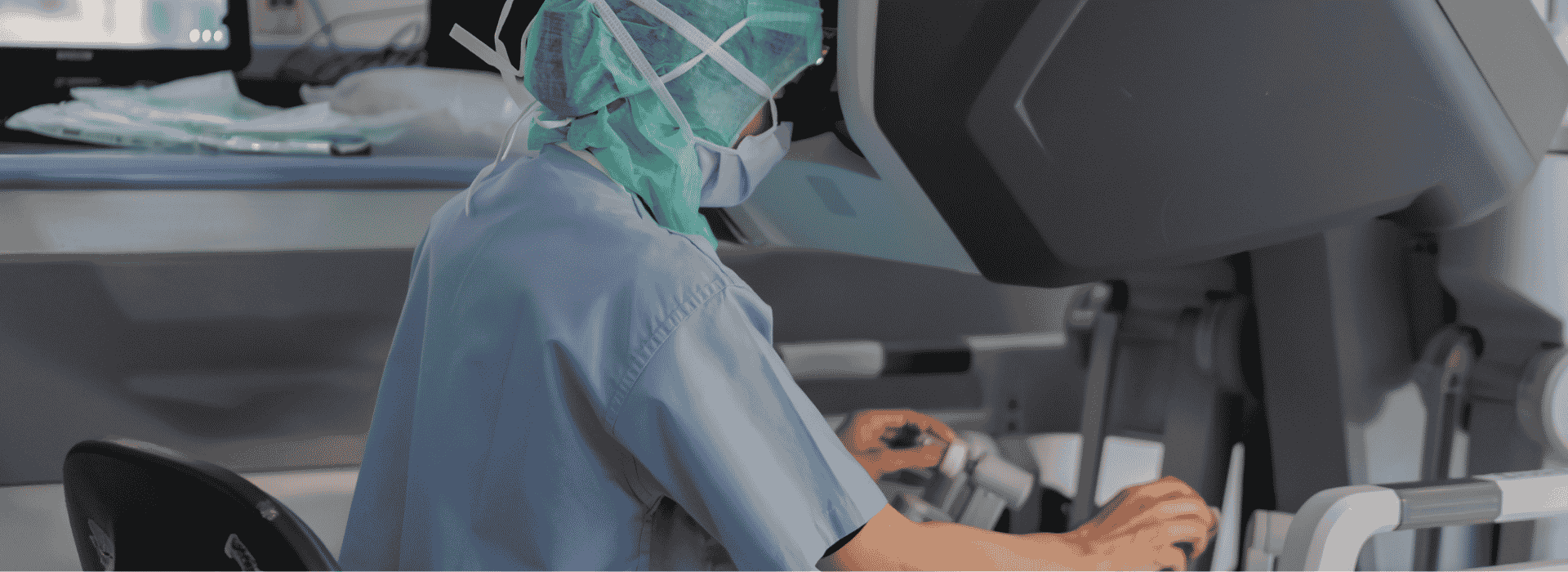
What makes this possible is the magnified, high-definition view and fine control the robotic system gives the surgeon in the pelvis, where the rectum sits in a narrow space near delicate structures – enabling the team to dissect in tight, deep spaces that traditional instruments cannot easily reach.
Dr. Ahmad has over 20 years of experience in colorectal cancer surgery, in both the United States and Saudi Arabia. He has performed more than 1,000 laparoscopic and some 200 robotic colorectal resections at JHAH, where he founded the hospital’s robotic colorectal program in conjunction with Johns Hopkins University in 2023.
“This is an excellent, though technically complex, alternative for rectal cancer patients who have been told they need complete removal of the anus and rectum with a permanent colostomy. The robotic approach provides deep pelvic dissection that is vastly more accurate and therefore enhances the success of the procedure,” said Dr. Ahmad.
For the patient, meeting the surgeon marked a turning point. “The moment I met Dr. Rizwan, I felt secure,” Dr. NZ said. “He is a very experienced doctor, and he made me feel that this was a case that would be cured – that I would live happily with my family and loved ones.”
She had been considering seeking the treatment elsewhere and her children had researched the robotic approach alongside her. “Learning that the procedure was available at JHAH was a relief,” she said. “Having trust in the medical team relieved a great deal of anxiety and fear.”
JHAH’s robotic surgery team has been performing surgery safely for the past decade and this latest innovation can make all the difference between living with a permanent colostomy and retaining normal bodily function.
Eligibility is assessed case by case, based on the tumor’s location and stage, in JHAH’s multidisciplinary clinic, which houses all the specialties needed to review the imaging studies. In a feature unique to JHAH, the patient is then booked for a single appointment with all the care providers involved to formulate an integrated treatment plan.
“I felt comfortable knowing that the whole team was evaluating my case from different perspectives,” said Dr. NZ. “All the doctors explained the risks from the standpoint of their own specialties, which made the treatment plan clear to me. I trusted their judgment, their decision and their plan.”
Her recovery went as planned. The team had explained what to expect, including a temporary stoma while her body healed. “It all made a huge difference,” she said. “I am a very active woman, and I was eager to complete the treatment plan and go back to my normal life.”
“I feel proud and blessed that we have a top multidisciplinary medical team and a top surgeon here in the Eastern Province,” she added. “To other patients, I would say ‘do not lose hope’. Medicine is always progressing and science will keep finding a way.”
Patients and families who would like to explore their options and eligibility are encouraged to speak with their JHAH care team, or to request an appointment through MyChart.